
Waterloo Region Home Sales for November 2025
In November, a total of 465 homes were sold in the Waterloo Region via the Multiple Listing Service® (MLS®) System of the Cornerstone Association of REALTORS® (Cornerstone). This represents a 14.8 per cent decrease compared to the same period last year and a decline of nearly 25 per cent compared to the average number of homes sold in the previous ten years for the same month.
“We saw a continued cooling of the housing market in November with sales down nearly 15 percent year-over-year and prices adjusting accordingly,” says Christal Moura, spokesperson for the Waterloo Region market. “While seasonal slowdowns are expected at this time of year, softer demand has contributed to higher inventory levels than we’ve seen in some time. These conditions offer a real opportunity for first-time buyers. Increased inventory and longer days on the market allow buyers to explore options thoroughly and, with their REALTOR®’s expertise, negotiate from a stronger position. The combination of Waterloo region being a highly desirable place to live and the lower interest rates makes me hopeful that buyers will be coming off the sidelines in the year ahead.”
Total residential sales in November included 274 detached homes (down 18.0 per cent from November 2024), and 91 townhouses (down 20.9 per cent). Sales also included 59 condominium units (up 11.3 per cent) and 41 semi-detached homes (down 6.8 per cent).
In November, the average sale price for all residential properties in Waterloo Region was $713,751. This represents a 5.4 per cent decrease compared to November 2024 and a 2.7 per cent decrease compared to October 2025.
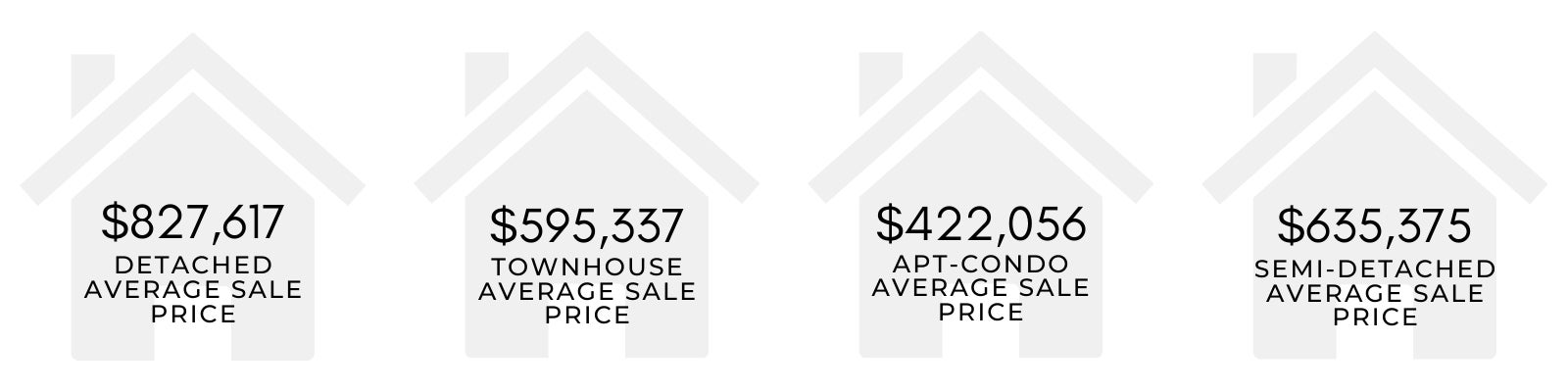
- The average sale price of a detached home was $827,617. This represents a 4.3 per cent decrease from November 2024 and a decrease of 1.8 per cent compared to October 2025.
- The average sale price for a townhouse was $595,337. This represents an 3.1 per cent decrease from November 2024 and an increase of 0.5 per cent compared to October 2025.
- The average sale price for an apartment-style condominium was $422,056. This represents a 6.3 per cent decrease from November 2024 and a decrease of 2.2 per cent compared to October 2025.
- The average sale price for a semi was $635,375. This represents a decrease of 1.4 per cent compared to November 2024 and an increase of 10.8 per cent compared to October 2025.
There were 764 new listings added to the MLS® System in Waterloo Region last month, a decrease of 14.4 per cent compared to November last year, however, this figure remains consistent with the previous ten-year average for November.
At the end of November, there were 1,757 homes available for sale in active status, representing a 15.6% increase from November of last year. This marks the highest number of homes for sale in November in over a decade.
The total inventory across the market increased by 25.9 percent, resulting in a 3.4-month supply of all property types by the end of November. Condominium apartments had the highest inventory, with 6.4 months’ supply, followed by townhouses with 4.1 months’ supply and detached homes with 2.8 months’ supply. The number of months of inventory represents the time it would take to sell all current inventories at the current sales rate.
The average time to sell a home in November was 39 days, which is 8 days longer than the previous month. In November 2024, it took 27 days for a home to sell, and the five-year average was 19 days.
Source: Cornerstone Association of REALTORS®
The statistics provided are based on information from the ITSO MLS® System. Multiple MLS® Systems operate within Ontario, and while none can be guaranteed to include every property listed or sold within a given area, they effectively illustrate market trends.
The statistics provided are based on information from the ITSO MLS® System. Multiple MLS® Systems operate within Ontario, and while none can be guaranteed to include every property listed or sold within a given area, they effectively illustrate market trends.
Understanding Chattels and Fixtures: What Every Property Owner Should Know
When buying or selling a property, it's important to understand the distinction between chattels and fixtures. These terms often come up in real estate transactions and are included in every Agreement of Purchase & Sale in Ontario. Let's break down what each term means and why it's essential to understand the difference.
What Are Chattels?
Chattels are movable items that are not permanently attached to the property, such as appliances, furniture, or curtains. These items can be removed by the seller before closing unless the agreement states otherwise. Common examples of chattels include furniture, non-built-in appliances, curtains, and artwork. In real estate transactions, chattels typically remain the seller's property and are not included in the sale unless specifically stated in the contract.
What Are Fixtures?
Fixtures, on the other hand, are items that have been attached to the property in such a way that they become part of the land or structure. Fixtures are considered part of the property and are usually included in the sale. Examples of fixtures include curtain rods, built-in cabinets, light fixtures, garage door openers and gazebos.
Why the Distinction Matters?
Understanding the difference between chattels and fixtures helps prevent disputes during property transactions. Buyers should ensure that the contract clearly specifies which items will remain with the property and which items the seller will take. It's always wise to list all included or excluded items in writing to avoid misunderstandings.
Can I Exclude a Fixture When Selling My Home?
Absolutely! It's not uncommon for a seller to exclude a fixture from the sale of their home. An example might be an antique light fixture that they'd like to bring to their new home. In this case, they would have two choices: 1) The fixture could either be removed and replaced before putting the property on the market, or 2) It could be listed as an exclusion in the MLS® listing and then written as an exclusion in the Agreement of Purchase & Sale. If choosing the latter, the light fixture would need to be replaced.
The line between chattels and fixtures is not always clear, but knowing the basics can help you navigate property transactions with confidence. When in doubt, reach out to your trusted real estate agent to clarify any uncertainties and protect your interests.
For more information about Buying or Selling a home in Waterloo Region and the surrounding areas,
get in touch!